


Lauryn
Founder, PRIMALS
I Thought My Toothbrush Was Keeping Me Healthy. It Was Filling Me with Plastic.
Here is a number that should stop you mid-brush: researchers have confirmed that a single plastic toothbrush can release up to 2.3 million microplastic particles per year directly into your mouth. That is not a typo. Every time you scrub your teeth with a conventional nylon-bristle toothbrush, tiny fragments of petroleum-derived plastic break off and enter your body. These particles carry chemicals like BPA, phthalates, and PFAS, compounds that scientists have linked to hormone disruption, gut inflammation, and even cardiovascular disease. And yet most people never think twice about the tool they press against their gums 730 times a year.
If you care about what goes into your body, you need to understand what microplastics in toothbrushes actually means for your health, and what you can do about it right now.
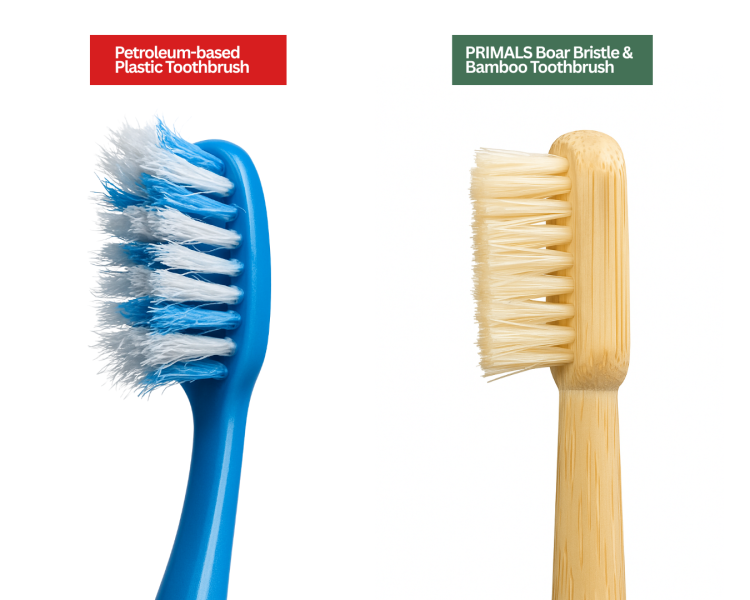
The Research Says
A 2025 study confirmed that a single plastic toothbrush releases up to 2.3 million microplastic particles per year directly into your mouth. That is 2.3 million tiny fragments of petroleum-based plastic laced with BPA, phthalates, and PFAS entering your body from one product alone.
Source: Ecotoxicology and Environmental Safety, 2025
What Are Microplastics and Why Are They in Your Toothbrush?
Microplastics are tiny plastic fragments smaller than 5 millimeters in diameter. They come from the breakdown of larger plastic products through mechanical friction, heat, and chemical exposure. Your toothbrush is one of the most overlooked sources of daily microplastic exposure because the bristles are made from nylon or polybutylene terephthalate (PBT), both petroleum-based plastics.
When you brush your teeth, the friction between those plastic bristles and your enamel causes them to shed. A 2025 study published in Ecotoxicology and Environmental Safety confirmed that a single plastic toothbrush can release up to 2.3 million microplastic particles per year into your mouth. The particles come in the form of fragments, fibers, films, and pellets, ranging from 8 to nearly 2,000 micrometers in size.
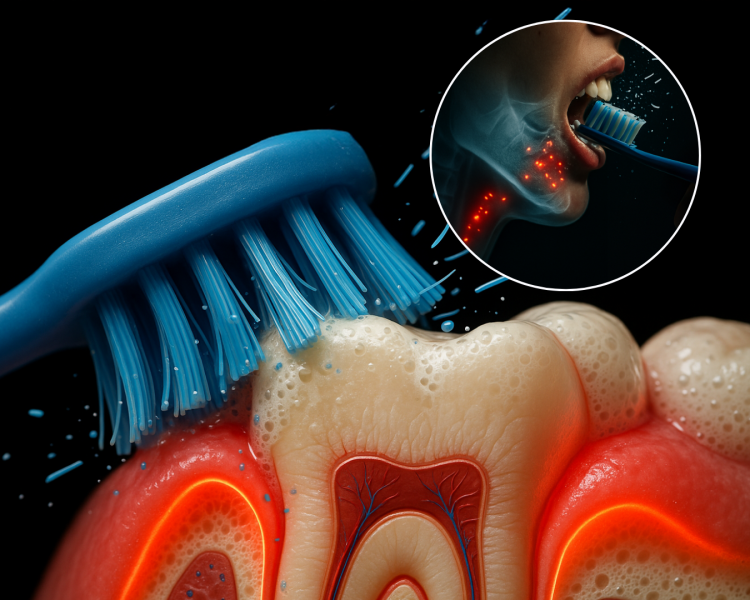
A separate 2023 study using advanced Raman imaging confirmed that plastic toothbrushes release thousands of microplastic particles daily, and that these particles can carry additional contaminants including plasticizer additives like Bisphenol A (PMID: 37689132).
The bottom line? Every conventional toothbrush on the market is shedding plastic into your mouth. You just cannot see it.
2.3M
microplastics released per year from one plastic toothbrush
13,000+
chemicals found in plastics, 3,200+ classified as hazardous
23B
plastic toothbrushes discarded globally every year
Why Microplastics in Your Mouth Are a Serious Health Concern
Your mouth is one of the most absorptive areas of your body. The soft tissue of your gums and the mucous membranes lining your cheeks act as direct pathways into your bloodstream. When microplastic fragments break off your toothbrush bristles, they do not just pass through your digestive system. Many are small enough to cross biological barriers and accumulate in your tissues and organs.
A 2025 review published in MDPI Dentistry Journal found that microplastics from oral care products can cause oxidative stress, mitochondrial dysfunction, immune dysregulation, and endocrine disruption once they enter systemic circulation (PMC: 12470694). Even more alarming, a 2024 medical study detected microplastics embedded in arterial plaque in patients, and those individuals were significantly more likely to experience a heart attack or stroke.
The chemicals hitching a ride on these plastic particles make things worse. Plastics contain over 13,000 known chemicals, and at least 3,200 of them are classified as hazardous, including carcinogens and endocrine-disrupting compounds. BPA, phthalates, and PFAS, all commonly found in nylon toothbrush bristles, are known to interfere with thyroid function, reproductive hormones, and metabolic processes.
⚠ What Most People Miss
This is not a distant environmental problem. This is a toxin delivery system disguised as your morning routine. You are exposed twice a day, every day, for your entire life.
I still remember the moment this became personal for me. I was standing at my bathroom sink, mid-brush, and I noticed tiny white fibers stuck between my teeth. I pulled one out and held it up to the light. It was a piece of my toothbrush bristle. A piece of plastic. I had been putting that in my mouth twice a day for years without a second thought.
That night I went down the research rabbit hole and what I found made me sick. Millions of microplastic particles per year. BPA. Phthalates. Accumulating in organs. And not a single mainstream brand talking about it. That was the night I decided to build PRIMALS. If no one else was going to make a toothbrush that was actually safe, I would.
— Lauryn, Founder of PRIMALS
The Natural Alternative: Why Boar Bristle Toothbrushes Eliminate the Problem
The simplest way to stop putting microplastics in your mouth is to stop using plastic bristles entirely. And boar bristle toothbrushes offer the most effective natural alternative available today.
Zero Microplastic Shedding
Boar bristles are made of keratin, the same natural protein found in human hair and nails. They cannot shed microplastics because there is no plastic in them. When a boar bristle wears down over time, it breaks down naturally without releasing toxic fragments. This means zero BPA, zero phthalates, zero PFAS, and zero petroleum byproducts entering your body while you brush.
A Firm, Deep Clean Without the Toxic Tradeoff
Boar bristles are naturally firm, giving you a satisfying deep clean that removes plaque and buildup effectively. Unlike nylon bristles that are rigid AND synthetic, boar bristles get the job done without shedding petroleum-based microplastics into your mouth in the process. You get the scrubbing power you actually want from a toothbrush, minus the toxic chemical exposure that comes with plastic.
Fully Biodegradable
Every year, over 23 billion plastic toothbrushes are discarded globally, creating hundreds of millions of pounds of waste that takes centuries to decompose. In the United States alone, 1 billion toothbrushes are thrown away annually, generating over 50 million pounds of plastic waste. A bamboo-handled, boar bristle toothbrush is 100% biodegradable and compostable, eliminating your contribution to this growing crisis.
The "Bamboo Toothbrush" Trap
Don't Be Fooled
The majority of "eco-friendly" bamboo toothbrushes on the market still use nylon bristles. The handle may be sustainable, but if the bristles are still made from petroleum-derived plastic, you are still putting microplastics in your mouth every single day. The bristle material is what matters most for your health, and most brands ignore this completely.
The PRIMALS Boar Bristle Toothbrush: Clean Teeth Without the Toxins
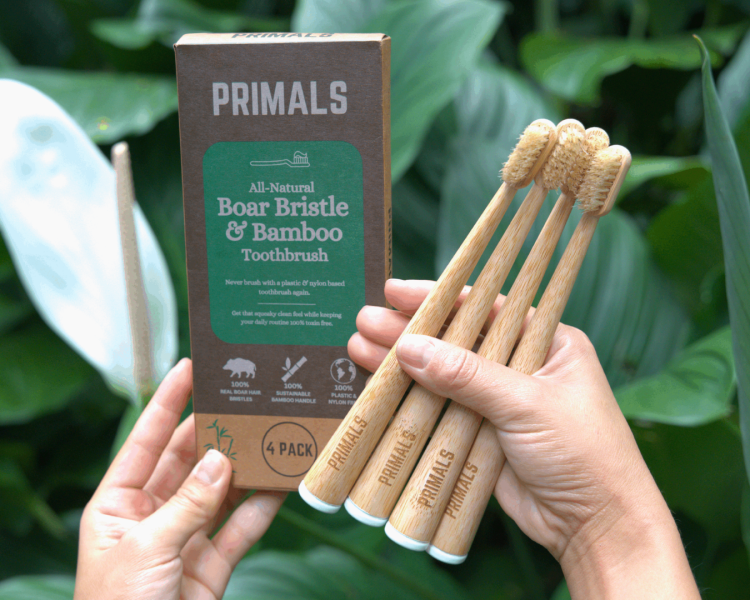
The PRIMALS Boar Bristle & Bamboo Toothbrush was designed from the ground up to eliminate every source of toxin exposure from your oral care routine. Here is what makes it different:
🦛
100% Pure Boar Bristles
Ethically sourced and sterilized through boiling. No nylon, no plastic, no petroleum.
🌳
Sustainable Bamboo Handle
Single piece of bamboo. No glue. Bristles woven directly into the brush head.
💧
Quick-Dry Design
Free-standing with sealed base. Prevents mold and outlasts other bamboo brushes.
🔐
BPA, Phthalate & PFAS Free
No synthetic materials means no chemicals to leach. Toxin-free by design.
With a 4.99 out of 5 star rating across 542+ reviews, the PRIMALS Boar Bristle Toothbrush is trusted by thousands of customers who have made the switch from plastic to natural.
Want a softer option? The PRIMALS Horse Bristle Toothbrush offers an ultra-gentle brushing experience that is perfect for sensitive gums and enamel.
Ready to stop brushing with plastic?
Join thousands who made the switch to toxin-free oral care.
SHOP THE BOAR BRISTLE TOOTHBRUSHFrequently Asked Questions About Microplastics in Toothbrushes
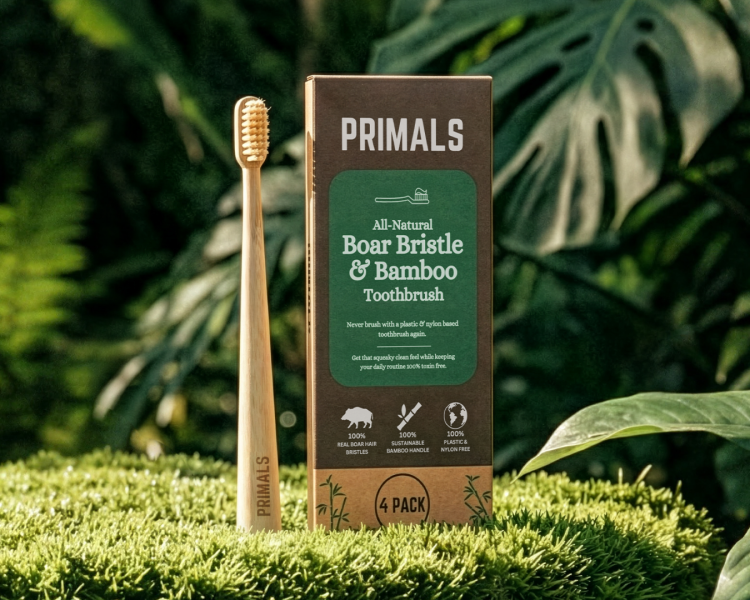
Stop Brushing with Plastic. Start Brushing with PRIMALS.
You brush your teeth twice a day, 365 days a year. That is over 700 opportunities for your plastic toothbrush to deposit microplastics, BPA, phthalates, and PFAS directly into your body. The science is clear: nylon bristles shed toxic fragments, and those fragments accumulate in your tissues over time.
The fix is simple. Switch to a toothbrush that was never made with plastic in the first place.
Your Mouth. Your Health. Your Choice.
Make the switch today. Your body will thank you tomorrow.
SHOP THE 4-PACK NOWKeep Reading

